Gathering Requirements

Brainstorming

Can explain brainstorming

Brainstorming: A group activity designed to generate a large number of diverse and creative ideas for the solution of a problem.

In a brainstorming session there are no "bad" ideas. The aim is to generate ideas, not to validate them. Brainstorming encourages you to "think outside the box" and put "crazy" ideas on the table without fear of rejection.


Exercises:

Characteristic of brainstorming


User Surveys

Can explain user surveys

Surveys can be used to solicit responses and opinions from a large number of stakeholders regarding a current product or a new product.


Observation

Can explain observation

Observing users in their natural work environment can uncover product requirements. Usage data from an existing system can also show how that system is being used, which can help in building a better replacement.
Example Usage data can reveal the situations where the user makes mistakes when using the current system.


Interviews

Can conduct a requirements interview

Interviewing stakeholders and domain experts can produce useful information about project requirements. How much it produces depends far more on how the interview is run than on how long it lasts.

  1. Find out what the person is responsible for before you meet them, and decide what only they can tell you. An interview spent on things you could have looked up is a wasted one.
  2. Open with something concrete rather than an abstract question. 'What do you need?' invites a vague answer, or a feature request that hides the need behind it. Walking through a recent situation, a screen of the current system, or a prototype gets you specifics.
  3. Ask what goes wrong today and what they do instead. Workarounds are where unmet requirements hide: if someone keeps a private spreadsheet, the system is failing them in a way worth understanding.
  4. Play the answer back in your own words before moving on. It is very common for both sides to leave an interview believing they agreed, having understood different things.
  5. Confirm your written notes with the interviewee afterwards. They can correct what you misheard while they still remember what they said.

Example Part of an interview with a manager, for a system that handles leave applications:

You: Walk me through the last time someone on your team asked for leave.
Manager: She emailed me, I checked the shared spreadsheet, and I replied saying yes.
You: What were you checking in the spreadsheet?
Manager: Whether anyone else was already away that week. And her leave balance, but that is usually out of date, so I ask the HR office instead.
You: So you don't rely on the balance in the spreadsheet?
Manager: No. I've been caught out by it before.

Two requirements surface that nobody asked for: an approver needs to see who else is away in the same period, and the leave balance has to be current enough to decide on.

Treat what you hear as claims to be checked, rather than requirements to be recorded. People often describe the process they are supposed to follow rather than the one they actually follow, and two stakeholders can want things that cannot both be true.
Example One department wants every leave application approved by a manager; another wants short absences to need no approval at all.


Focus Groups

Can explain focus groups

Focus groups are a kind of informal interview within an interactive group setting. A group of people (e.g. potential users, beta testers) is asked about their understanding of a specific issue, process, product, advertisement, etc.

: How do focus groups work? - Hector Lanz extra


Prototyping

Can explain prototyping

Prototype: A prototype is a mock-up, a scaled-down version, or a partial system constructed

  • to get users’ feedback.
  • to validate a technical concept (a "proof-of-concept" prototype).
  • to give a preview of what is to come, or to compare multiple alternatives on a small scale before committing fully to one alternative.
  • for early field-testing under controlled conditions.

Prototyping can uncover requirements, in particular, those related to how users interact with the system. UI prototypes or mock-ups, also called wireframe diagrams, are often used in brainstorming sessions or in meetings with users to get quick feedback.

Example A mock-up of a dialog box:
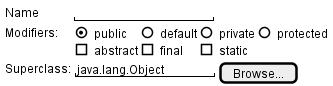

[source: plantuml.com]

Prototyping can be used for discovering as well as specifying requirements e.g. a UI prototype can serve as a specification of what to build.


Product Surveys

Can explain product surveys

Studying existing products can unearth shortcomings that a new product can address. Product manuals and other forms of documentation can tell us how existing solutions work.
Example When developing a game for a mobile device, a look at a similar PC game can give insight into the kind of features and interactions the mobile game can offer.


Validating Requirements

Can validate gathered requirements

Gathering requirements tells you what people said; validating requirements tells you whether what you wrote down is what they meant. It is worth distinguishing from the check that comes much later:

  • Validating requirements asks whether you have written down the right thing.
  • Verifying software asks whether what was built matches what was written down.

A team that only does the second can build exactly the wrong product, correctly.

Three checks are cheap enough to run on a student project:

  1. Walk the requirement back to the stakeholder in words they would use, and wait for the correction. Reading your own notes aloud to the person who gave them to you finds misunderstandings faster than any amount of rereading them yourself.
  2. Put something in front of a user instead of describing it. People correct a rough sketch or a mock-up far more readily than they correct a paragraph, because they can see what they would actually be given.
  3. State the observable result that would settle the requirement. If nobody can say what would count as having met it, the requirement is not yet saying anything a team could build against.

Example A requirement gathered for a learning management system:

Lecturers should be able to see how their students are doing.

Walked back to the lecturer who asked for it, this turns out to mean something much narrower: they want to spot students who have stopped participating, early enough to contact them. 'How students are doing' would have been built as a grade dashboard, which nobody wanted.

A requirement you cannot yet state in observable terms is not wrong, it is not ready. Record it as an open question, or as the next thing to put a prototype in front of. A product vision, an unresolved disagreement between two stakeholders, or a quality concern that nobody has quantified yet are all legitimate inputs at this stage; deleting them because they cannot be phrased as a check yet would throw away the very things most worth resolving.